
Paint sheens, explained.
Flat, matte, eggshell, satin, semi-gloss and gloss: what each one does, where it belongs, and why the names do not line up from brand to brand.
- Higher sheen cleans more easily
- Lower sheen hides more flaws
- Flat touches up best
- Sheen names vary by brand
Direct answer: Paint sheen is how much light the dried film reflects. Moving up from flat through matte, eggshell, satin and semi-gloss to gloss, paint generally gets easier to clean and more resistant to wear, and it also shows more of the surface underneath: patches, roller marks and drywall seams. Lower sheens hide flaws and touch up best. Most homes end up with flat ceilings, eggshell or matte walls, satin in hard-working rooms, and semi-gloss on trim and doors. Sheen names are not standardized between brands, so judge by samples.
What sheen actually is
Sheen is a property of the dried paint film. A flat finish has a rougher surface at a microscopic level and scatters light; a gloss finish is smoother and reflects light back in one direction. That difference changes three things you will notice: how the wall looks, how well it hides imperfections, and how it holds up to cleaning.
The sheens, side by side
| Sheen | Look | Cleaning and wear | Typical use |
|---|---|---|---|
| Flat | No shine, soft and even | Lowest; marks can burnish | Ceilings, low-traffic walls, older plaster |
| Matte | Very low shine | Better than flat in many modern lines | Living rooms, bedrooms, dining rooms |
| Eggshell | Slight glow | Wipeable | Most interior walls |
| Satin | Soft, visible sheen | Scrubbable in most lines | Kitchens, baths, hallways, kids' rooms |
| Semi-gloss | Noticeably shiny | Very durable and easy to clean | Trim, doors, cabinets, railings |
| Gloss | Highly reflective | Hardest-wearing | Accent doors, furniture, some metal |
The trade-off in one sentence
The more a finish shines, the easier it is to wipe clean and the more honestly it shows the surface beneath it. That is why preparation matters more as sheen goes up: a semi-gloss door will show every brush mark and dent that a flat wall would hide.
Room by room
- Ceilings. Flat, almost always. It hides seams and texture and does not reflect light from windows and fixtures.
- Living rooms, bedrooms, offices. Matte or eggshell. Enough washability for everyday marks without a shine.
- Kitchens, bathrooms, laundry rooms. Satin is a common choice because it handles moisture and frequent cleaning better. A good bathroom fan matters as much as the sheen.
- Hallways, stairwells, kids' rooms. Eggshell or satin, depending on how much scrubbing the walls see.
- Trim, doors and cabinets. Semi-gloss is the standard. Satin gives a softer look and still cleans well.
Outside the house
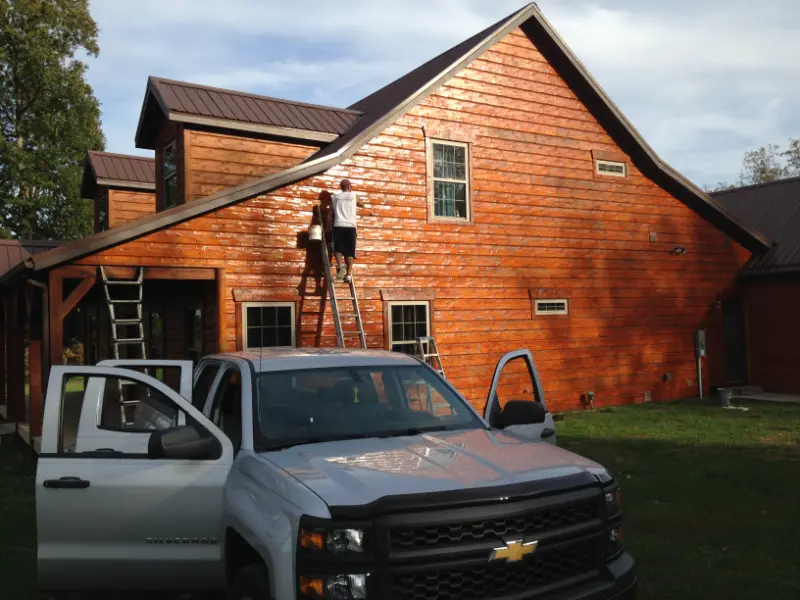
On exteriors the same logic applies. Flat and low-sheen finishes are common on siding and stucco because they hide surface texture and irregularities; satin is popular on siding where easier cleaning is wanted; semi-gloss is typical on trim, doors and shutters. At Boulder's elevation, sun exposure is high on south and west walls, so product line and preparation do more for longevity than sheen alone.
Why touch-ups show
Flat paint touches up best because a fresh patch scatters light the same way the surrounding wall does. On higher sheens, a touch-up can read as a shinier or duller spot, especially in raking light from a window. Painting a wall corner to corner is often the cleaner fix on satin and semi-gloss.
Names are not standardized
There is no single industry definition of what counts as eggshell or satin, and manufacturers set their own gloss ranges. One brand's eggshell can sit close to another's satin. Look at large painted samples in the actual room before committing, and keep the exact product line and sheen on record for future touch-ups.
Low-odor and low-VOC options
Most major paint lines offer low-VOC or zero-VOC versions across the common sheens, so choosing a sheen rarely rules out a lower-odor product. Ask for the product data sheet if that matters to you.
Sheen questions
What paint sheen is best for walls?
What sheen should trim and doors be?
Why does flat paint touch up better?
Is eggshell the same from every brand?
Get a written estimate
Your choice: we come out for a free walkthrough, or you send photos and skip the visit. Peeling, water damage or a landmark property gets a walkthrough first.
Every estimate names the surfaces, the preparation steps, the exact product line and sheen, the coat count, the schedule and the warranty.
Prefer to talk? 720-208-5645, seven days.