Fiber cement siding painting in Boulder County
Fiber cement is now the most common siding on new homes in our part of the country, and much of it is reaching its first repaint. It is easier to paint than old cedar in some ways and less forgiving in others. Here is how it should be done.
- 100% acrylic exterior paint; no stain, oil or alkyd
- Factory primer needs a topcoat within 180 days
- ColorPlus can be repainted when it fades
- Noncombustible board, a plus in wildfire zones
By Boulder CO Painters · Updated
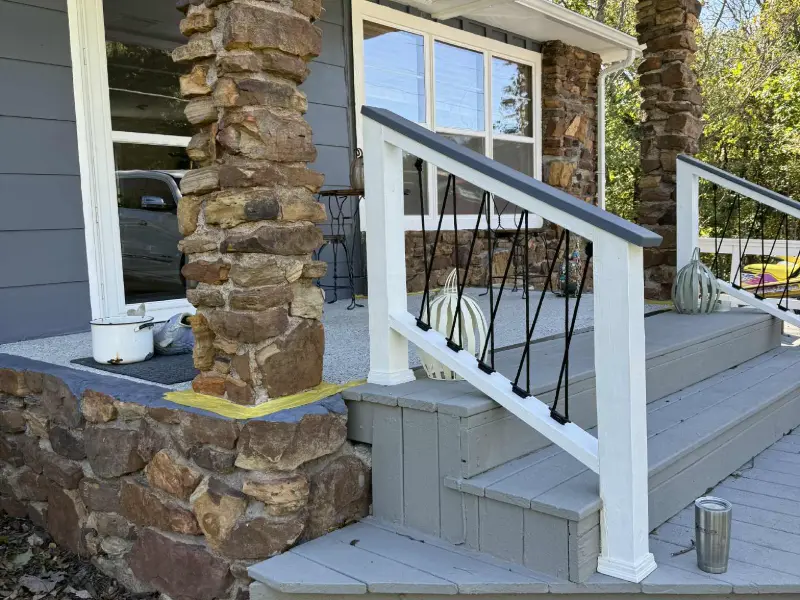
Direct answer: Fiber cement siding paints well when it is washed, dry, caulked with the right sealant and finished in a 100% acrylic exterior paint. James Hardie says not to use stain or oil-based paint on it. Factory-primed boards need their topcoat within 180 days of installation, and factory-colored ColorPlus siding can be repainted when it fades or you want a change.
Why is there so much fiber cement in Boulder County?
Builders switched to it. The National Association of Home Builders, working from the Census Bureau’s Survey of Construction, reports that fiber cement was the principal exterior wall material on 42% of new single-family homes started in 2025 in the Mountain division, which includes Colorado. That was the first time in data going back to 2000 that it edged past stucco there. Nationally the share was 22.6%.
Wildfire rules push the same way. Boulder County’s ignition-resistant construction code lists cementitious cladding among the noncombustible materials that satisfy its exterior-wall requirement, and when an owner in the unincorporated county replaces 25% or more of the wall area, the whole wall has to meet that standard. James Hardie describes its siding as noncombustible. So you see fiber cement on new subdivisions in Erie and Longmont, on re-sided older homes, and on rebuilds along the wildland edge. Our guide to painting in wildfire zones explains where it fits in the bigger picture.
What paint goes on fiber cement?
A good waterborne 100% acrylic exterior paint. James Hardie’s finishing bulletin for its primed siding calls for exactly that, and lists what not to use: stain, oil- or alkyd-based paint and powder coating. Acrylic films stay flexible, which matters on a wall that swings from a hot October afternoon to a hard freeze the same night.
Sherwin-Williams’ substrate guide gives the same picture with product names. For new fiber cement it recommends a masonry primer such as Loxon on unprimed board, Duration as the topcoat of choice (one coat over primer), and Loxon Masonry Topcoat as an alternative that needs two coats. For a repaint, it says primer is not required unless the substrate is exposed, and one coat of Duration can do. We usually still put two coats on south and west walls. NOAA lists the Boulder weather station at about 1,670 meters, and the EPA says UV rises about 6% for every kilometer of elevation, so the sunny sides here take a harder beating than the same wall in Kansas.
Which situation is your siding in?
| Your siding | What it needs | Timing and notes |
|---|---|---|
| Factory-primed, never painted | Wash, caulk joints and trim, 100% acrylic topcoat | Hardie says finish within 180 days of installation |
| Unprimed board | Masonry primer, then acrylic topcoat | Common on some older installs and replacement boards |
| ColorPlus factory finish, faded or dated color | Clean, dull any glossy areas, acrylic topcoat | Factory finish carries a 15-year limited warranty; read it before painting over |
| ColorPlus with nicks | Hardie touch-up pen or kit, edge sealer on cut ends | Hardie says replace the piece if damage is larger than a dime |
| Field-painted, chalking or faded | Wash, spot-prime bare spots, one or two acrylic coats | In our experience it fades before it peels |
| Field-painted, peeling | Scrape, sand, prime the bare areas, two coats | Peeling on cement board usually points to water or a poor original paint job |
How do we prepare fiber cement for paint?
- Wash. Sherwin-Williams calls for pressure cleaning at a minimum of 2,100 psi on repaints to remove dirt, chalk and loose coating. We use a wide fan tip and keep the spray angled downward so water is not driven up behind the laps, then let the walls dry fully.
- Look at the joints. Butt joints, corners and the gaps where siding meets trim are where water gets in. James Hardie’s installation guide calls for caulk meeting ASTM C920 Grade NS, Class 25 or higher, or a latex joint sealant meeting ASTM C834. Cheap painter’s caulk shrinks and splits at those joints within a couple of Boulder winters.
- Seal raw edges. For its ColorPlus boards, Hardie’s installation guide requires edge coating on any cut made in the field, and on primed boards the cut ends need primer and paint like the faces. Unsealed cut ends at windows and replaced boards soak up water, and paint lifts there first.
- Check the bottom course. Fiber cement should not sit in soil or wet mulch. We tell you where grade or landscaping is touching the boards, which matters for moisture and for wildfire clearance.
- Paint in the right weather. Waterborne acrylic needs dry walls and temperatures inside the label range through the night it cures. Our season and altitude guide has the Boulder freeze dates.
Is it fiber cement or engineered wood?
Worth checking before anyone buys paint. Engineered wood lap siding, made of resin-bonded wood strands, looks a lot like fiber cement once it is painted, and it is common on newer homes too. It is a wood product, so it is not noncombustible, and its manufacturers publish their own finishing rules. Look for a label or leftover boards in the garage, ask your builder, or check the cut end at a corner: fiber cement looks like gray stone inside, engineered wood looks like compressed wood chips. Real cedar is a different job again; see cedar siding staining.
When is your primer window up, and what might it cost?
Enter the month your siding went up and roughly how many square feet of wall you have. The date check uses Hardie’s 180-day window for factory-primed boards; the price range uses Angi’s Denver-area exterior rate, not our price.
Wall area is siding only: for a rough figure, multiply the house perimeter by the wall height and subtract big windows and garage doors. More on pricing on what painting costs in Boulder.
Fiber cement painting questions
Can you stain fiber cement siding?
How long can primed Hardie siding go without paint?
Do I need primer to repaint fiber cement?
How often does painted fiber cement need repainting in Boulder?
Can you paint over ColorPlus siding?
Is fiber cement required for houses in Boulder County wildfire zones?
What does it cost to paint fiber cement siding?
Sources
Every figure and rule on this page comes from the sources below, checked October 25, 2026. Codes and programs change; confirm with the agency before you build.
- Frequently asked questions (acrylic topcoat, repainting ColorPlus, warranties, fire resistance), James Hardie.
- Technical Bulletin 22: Finishing James Hardie primed siding, James Hardie.
- Quick Start Installation Guide (TB1804, touch-up and caulk), James Hardie, 2019.
- Know your substrates and what to use on them (fiber cement section), Sherwin-Williams.
- Exterior material trends in single-family homes (2025 starts, Census Survey of Construction), NAHB Eye on Housing, July 2026.
- Ignition Resistant Construction, publication B-37 (effective July 1, 2026), Boulder County Building Division.
- How much does it cost to paint a house exterior in Denver, CO?, Angi, updated November 13, 2025.
- Learn about the UV Index, U.S. Environmental Protection Agency.
Get your fiber cement siding priced
Your choice: we come out for a free walkthrough, or you send photos and skip the visit. Peeling, water damage or a landmark property gets a walkthrough first.
Every estimate names the surfaces, the preparation steps, the exact product line and sheen, the coat count, the schedule and the warranty.
Prefer to talk? 720-208-5645, seven days.